The Bongaarts-Feeney tempo-adjusted TFR (TFR*) (cont.)
Figure 4 compares the observed TFR, the TFR* and the cohort TFR for American women born in the first half of the 20th century. In order to facilitate the comparison between period and cohort measures, the period measures are weighted for the years in which the cohort did its childbearing. In that plot, the tempo-adjusted TFR* mimics the fertility trends of the cohorts much better than the period TFR, and that led Bongaarts and Feeney to their assertion that the TFR* is a “period measure purged of tempo effects”. This new measure may thus provide a better estimate of the number of children women will bear under current conditions than the ordinary TFR, and therefore, a better estimate of the fertility quantum.
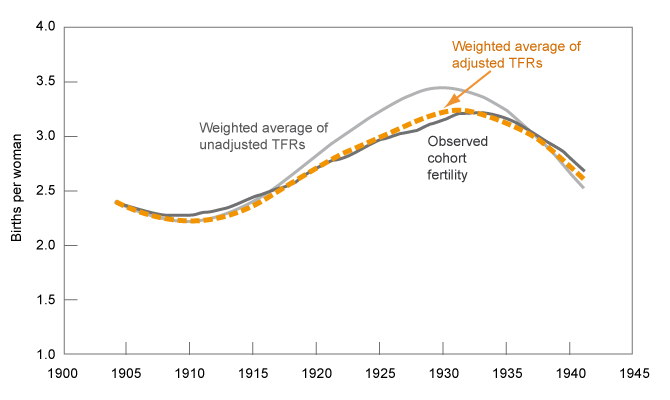
Figure 3: Observed and estimated completed fertility of cohorts of US women born between 1904 and 1941
Adapted from Bongaarts and Feeney (1998)